


Keyword research is the foundation of every effective SEO strategy. Without it, you are creating content and optimizing pages based on assumptions about what your audience searches for rather than evidence. With it, every piece of content you publish is built around real demand, real search behavior, and real opportunities to reach people who are actively looking for what you offer.
This guide covers how keyword research actually works, the tools and approaches that produce the best results, and how to turn keyword data into a content strategy that drives consistent organic traffic.
Why Keyword Research Matters
Discovering and targeting relevant keywords is what allows businesses to increase online visibility, attract qualified leads, and maximize the impact of their marketing efforts. A page that ranks for the wrong keywords might attract significant traffic while generating zero leads. A page that ranks for highly targeted keywords might attract less traffic overall but convert at a dramatically higher rate because the visitors arriving are exactly the people your business serves.
The goal of keyword research is not to find the keywords with the highest search volume. It is to find the keywords where ranking is achievable, where the intent behind the search aligns with what you offer, and where capturing that traffic will actually move your business forward.
Start With Clear Goals and Seed Keywords
Before opening any keyword research tool, define what you are trying to achieve. Are you trying to generate leads for a specific service? Drive traffic to a product category? Build authority around a particular topic? The answer shapes which keywords are worth pursuing and which are not.
From there, brainstorm seed keywords: the core terms and phrases that directly describe what your business does. A marketing agency in New Hampshire might start with terms like “digital marketing agency,” “SEO services,” or “Google Ads management.” An online shoe retailer might start with “running shoes,” “athletic footwear,” or “sports shoes.” These broad starting points are not necessarily the keywords you will target, but they are the inputs that lead you to the opportunities worth pursuing.
Use Keyword Research Tools to Expand and Validate
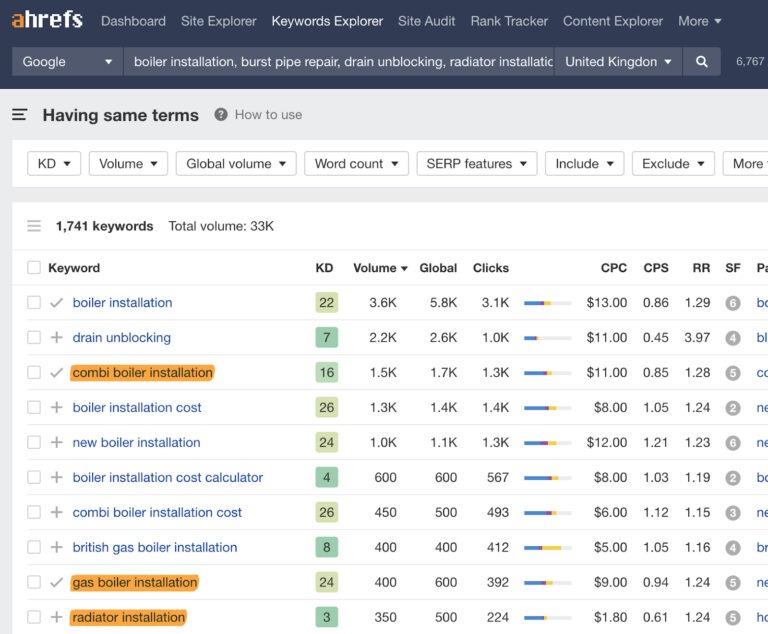
Keyword research tools grow your keyword list and provide insightful data on search volume, competition, and related terms that would be impossible to gather manually. The most widely used tools include Google Keyword Planner, SEMrush, Ahrefs, and Moz Keyword Explorer.
Enter your seed keywords into these tools and examine the data they return. You will see monthly search volume estimates, keyword difficulty scores, related keyword suggestions, and in some cases, the specific pages currently ranking for each term. This data transforms your initial brainstorm from a list of guesses into a prioritized, evidence-based keyword strategy.
Understand Search Intent Before Targeting Any Keyword
Search intent is the reason behind a query. Someone typing “what are running shoes” is in the early information-gathering stage. Someone typing “best running shoes for marathon training” is doing active research and comparing options. Someone typing “buy Nike Pegasus 41” is ready to purchase. These three searches require completely different content to satisfy them effectively.
Matching your content to the intent behind the keyword is one of the most important factors in whether a page ranks and whether it converts. The four primary intent categories are informational, where users want to learn something; navigational, where users want to reach a specific website; commercial, where users are comparing options; and transactional, where users are ready to take action.
Before targeting any keyword, ask yourself what the person searching for it actually wants. Then build content that delivers exactly that.
Prioritize Long-Tail Keywords
Long-tail keywords are longer, more specific phrases that target specialized audiences and typically produce higher conversion rates despite lower search volumes. A broad keyword like “running shoes” might have hundreds of thousands of monthly searches, but is also competed for by Nike, Adidas, REI, and every major running retailer in the country. A long-tail keyword like “best running shoes for flat feet, wide toe box” has far less search volume but is also far easier to rank for and attracts a much more specific, purchase-ready audience.
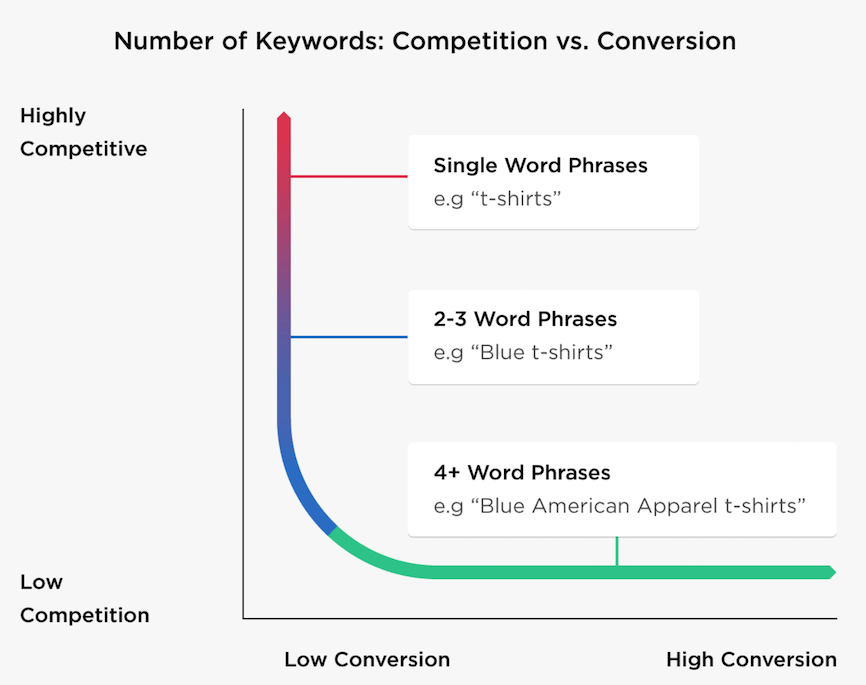
For most businesses, a keyword strategy heavily weighted toward long-tail terms will outperform one chasing high-volume competitive keywords, particularly in the early stages of building organic authority. As your domain authority grows, you can expand into more competitive terms from a stronger foundation.
Analyze What Your Competitors Are Ranking For
Your competitors have already done keyword research, whether they did it deliberately or not. The keywords they are ranking for represent validated opportunities in your market, and the gaps in their coverage represent opportunities for you to establish authority that they have missed.
Tools like Ahrefs, SEMrush, and SpyFu allow you to enter a competitor’s domain and see which keywords they rank for, how much traffic those keywords drive, and how difficult those keywords are to compete for. Look for keywords where your competitor ranks on page two or three rather than page one. These represent terms where the competition is beatable with well-executed content targeting the right intent.
Mine User-Generated Content and FAQs for Keywords
Some of the most valuable keyword opportunities are hiding in plain sight in customer reviews, forum discussions, social media comments, and the questions your sales team hears repeatedly. These are the exact phrases your customers use when describing their problems and searching for solutions, which makes them inherently more aligned with search intent than keywords generated by brainstorming alone.
Platforms like Reddit, Quora, and industry-specific forums are particularly useful for discovering the conversational language your audience uses around the topics you cover. Frequently asked questions are a goldmine for long-tail keywords because they represent real queries that people type into search engines, often verbatim.
Include Local Keywords if You Serve a Specific Area
For businesses with a local presence or geographic service area, incorporating location-specific keywords into your keyword strategy is essential for capturing relevant local searches.
A marketing agency in Concord, New Hampshire, targets different keywords than a national agency. Adding location modifiers like “marketing agency Concord NH,” “SEO services New Hampshire,” or “Google Ads management Manchester NH” to your keyword strategy allows you to compete effectively for local searches where national competitors are not optimizing. Local keyword targeting combined with an optimized Google Business Profile creates the strongest possible foundation for local search visibility.
Organize Keywords Into Topic Clusters
Once you have a keyword list, do not treat each keyword as an isolated page opportunity. Organize related keywords into topic clusters, groups of related terms that can be addressed through a pillar page and a series of supporting content pieces that interlink with each other.
A pillar page on “email marketing strategies” might be supported by individual posts targeting “email subject line best practices,” “how to segment your email list,” “email automation for small businesses,” and “email marketing analytics.” Each supporting post targets a specific long-tail keyword while also reinforcing the authority of the pillar page through internal linking.
This cluster approach signals to Google that your site has comprehensive coverage of a topic, which builds topical authority and improves rankings across the entire cluster rather than for individual pages in isolation.
Monitor, Measure, and Continuously Refine
Keyword research is not a one-time project. Search trends shift, new competitors enter the market, and Google’s understanding of content quality continues to evolve. A keyword strategy that is not regularly reviewed becomes stale and loses effectiveness over time.
Use Google Search Console and your analytics platform to monitor which keywords are driving traffic and conversions, which pages are ranking but not converting, and which terms are generating impressions without clicks. Pages with high impression counts and low click-through rates are your highest-priority quick wins: improving the title tag and meta description for those pages often produces measurable traffic increases without requiring any changes to the content itself.
Review your keyword performance monthly, look for new opportunities that have emerged in your market, and adjust your content calendar to pursue the terms most aligned with your current business goals.